Partner Notification and Risk Self-assessment Tools
Our research examines online partner notification tools for sexually transmitted infections (STIs), exploring diverse strategies, user and provider perspectives, and innovative approaches like e-cards and web-based toolkits. We also explore the design, utility, and perceptions of online HIV/STI risk self-assessment tools, focusing on features like user-friendly design, credible branding, and accessibility.
Digital Partner Notifications
Findings from our studies emphasize the importance of developing flexible and user-centred online partner notification tools to support STI prevention efforts. Innovative approaches, such as e-cards for partner notifications and platforms like inSPOT, prioritize anonymity, accessibility, and ease of use for clients. These tools aim to encourage individuals to inform their partners about potential exposures while reducing the stigma often associated with partner notifications. The research also identifies key differences in how clients and healthcare providers perceive the effectiveness and acceptability of these tools. While clients value privacy, simplicity, and control over the notification process, providers focus on ensuring follow-up care and accurate information delivery. Findings from focus groups and comparative studies of clinic-based versus online notification outcomes underscore the need to bridge these perspectives to create effective, widely accepted solutions for public health initiatives.
Digital Risk Self-assessment Tools
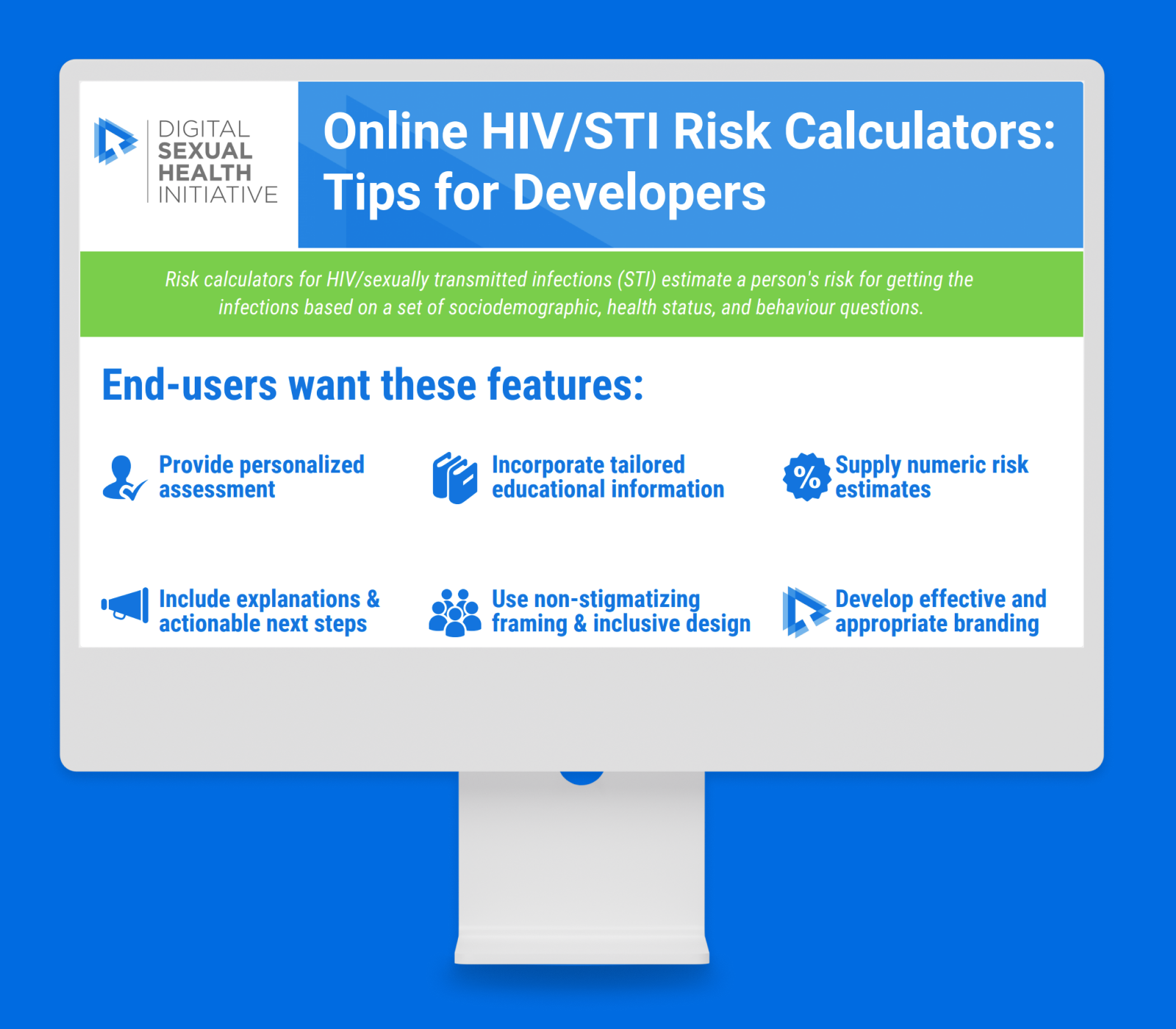
Studies highlight the importance of creating online risk calculators that balance ease of use, trustworthiness, and accessibility. Features such as intuitive interfaces, clear and supportive messaging, and strong branding were identified as essential for encouraging user engagement. These tools aim to provide individuals with reliable risk assessments while fostering confidence in the information provided. At the same time, the research addresses tensions between potential users and service providers regarding these tools’ reliability and acceptability. Users prioritize simplicity and anonymity, while service providers emphasize accuracy and appropriate follow-up care. These findings offer valuable insights for improving digital health interventions and building trust in online tools for HIV/STI prevention and education.